From the Desk of Maestro William Henry Curry Smetana’s “The Moldau” A Story of National and Personal Resilience
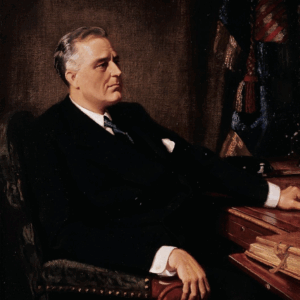
I have a special admiration for one of the most resilient presidents in American history: Franklin Delano Roosevelt. As a young man, he was the wealthy golden boy of American politics. And then, at the age of 39, he awoke and would never walk again. Polio. He could have given up his dreams of serving this country. But he didn’t. And as President of the United States for four consecutive terms, he guided this country through the Great Depression and WW II. He showed epic resilience. In his first inaugural address he said, “We have nothing to fear, but fear itself.” And in his last, given a few months before he passed, he gave us one more lesson in optimism:
”There are times when we are secure and untroubled. However, things in life will not always run smoothly. Sometimes we will be rising …then all will seem to reverse itself and start downward. The great fact to remember is that the trend of history always has an upward trend” (The Inaugural Addresses of the Presidents. Ed. John Gabriel Hunt. 396).
My life has been centered on people, books, music, and my heroes—the ones who took on difficult challenges and resolved to keep on keepin’ on. One day at a time, one step at a time. That is resilience.
One of my dear friends (and a dear friend of the DSO) is Jerrold G. Posner. Jerry was a successful violinist, teacher, and fundraiser for many years, and his wife Katherine was a wonderful singer and voice teacher. Jerry is also a published author, and I think his masterpiece is his recent work Being, Consciousness, Value: A Spiritual Journal. This wise and humane book has been extremely helpful to my own resilience during this era as I have realized that the objectivity of our thinking can all too easily be compromised by self-interest. Critical thinking remains essential when seeking answers to difficult questions—but we are all capable (consciously or not) of rearranging the facts to get the answer we want. I believe that vigilance in the pursuit of truth can lead to clarity and confidence about our decisions.
As Posner writes:
“Perseverance gives an inkling into the power and presence of the spirit pulsating within us….If we keep our wits about us, we will discover that despite the mystery, the anguish, and the disorientation, there are aspects of our existence that illuminate our path. Light slips under the wall of doubt and uncertainty when we trust in and assert our belief that we are intrinsically worth the effort it takes to carry on in life. . . There is a spirit within us on behalf of which we strive” (170).
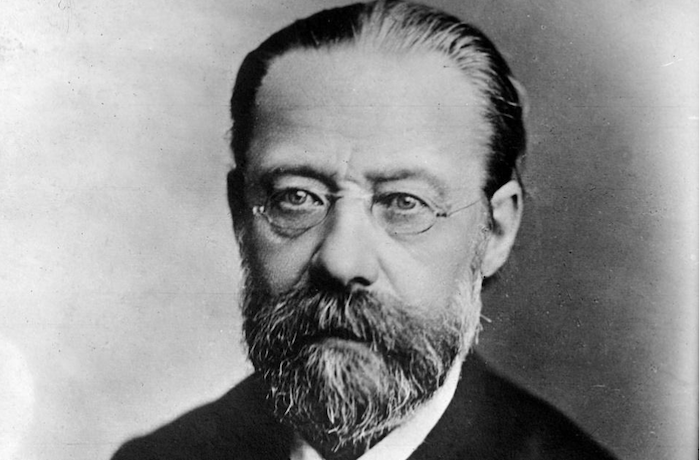
Nothing illustrates this spirit more than the life of one of my most beloved heroes, the 19th century Czech composer Bedrich Smetana. His fame had increased dramatically in the years leading up to what became his most famous opera, The Bartered Bride. And by 1874, he was one of Europe’s most promising composers. But in that year, at age 50, he noticed a faint ringing in his right ear accompanied by a slight tingling sensation. Like many of us might, he assumed it would soon go away. It did not.
He kept a diary during this time, a chronicle of his swift and harrowing journey into total deafness. On October 8th, 1874, he wrote,
”For the first time in ages, I can again hear all the octaves in their proper balances, which were completely jumbled up in my ears. I still cannot hear anything with my right ear”(Bedrich Smetana—Letters and Reminiscences, Ed. Frantisek Bartos, 150).
Only a few days later, his entry notes the condition worsening and a total loss of hearing in his left ear. And by October 30th, he was forced to admit, “I fear the worst: that I have become completely deaf. I can hear nothing at all. How long will this last?! What if I do not get better” (Letters and Reminiscences 151).
A deaf composer? As we know from Beethoven’s example, such a thing is possible—but incredibly rare, especially given the relatively sudden onset of his condition. Beethoven composed his greatest works after losing his hearing, but at least he had a decade of partial hearing during which he could adapt and emotionally process his dark fate.
It is painful to think of Smetana having only one month to make this psychic adjustment. And to add to his unhappiness, he suspected (correctly) that his hearing loss was related to his contracting syphilis several years before. At that time, the disease was considered both incurable and unmentionable. Smetana never told anyone about the origin of his distress. Instead, he bore this burden with dignity and resolved that come what may, he would have to compose again.
And then a miracle, a spiritual blessing, occurred! As he wrote a few years later, “In the middle of my suffering, I called to my spirit, and somehow this spirit made it possible for me to imagine my compositions as though I heard them!” The day after realizing he could return to composing, he began work on the twelve-minute orchestral piece, “The Moldau,” that is still his most famous work and a testament to his personal resilience.
It is one of six tone poems in his larger work Má Vlast (“My Country”), which celebrates various aspects of Czech culture—its history, folk life, and beautiful landscapes. “The Moldau” takes its name from the largest river in Czechoslovakia, the Vltava—which was commonly known in Smetana’s time by its German name (German being the official language of the Habsburg Empire.) The work could be called “a day in the life of a river.”
The journey begins in the morning at the source of the Moldau, its birth. We hear the soft sounds of small streams coming together to create the river. As it widens, we hear the emergence of an expressive melody in the violins that will serve to bind the work together through its various stages. Further down the river we hear horn calls from a hunting party in the forest. Then we pass a wedding celebration in progress on the shore as the guests, bride, and groom dance a polka.
As night falls, the music becomes slower and softer, and the atmosphere changes to one of mystery. The dark water below and the shining stars above accompany this moment of blissful peace. Then, gradually, the river becomes more agitated, and the tempi and volume of the music increase.
The violin melody returns for a moment—and then we find ourselves in the middle of a dangerous thunderstorm, with sheets of rain and lightning. The storm could be a metaphor for how challenged we are amid turbulence when a happy ending is not guaranteed. And indeed, the music reaches a terrifying climax—but then the storm diminishes, and the violin melody returns, now sounding like a victory dance. We survived! And slowly, the river disappears into the distance.
To be sure, this is a portrait of a journey down a river. But to me, it is also a sacred document that depicts the hazards and beauties of a journey through Life. A life that will include serenity, drama, fragility, love, and hopefully finding the strength to survive the dark days that Fate brings to all people.
As Frantisek Bartos writes in his introduction to Bedrich Smetana—Letters and Reminiscences:
”Smetana had to bear not only the hostility and malice of his opponents, but also the malevolence of nature. The loss of his hearing, a crushing blow for a musician, kept Smetana from public activity. Yet he went on composing and to the end the substance of his great works remained clear, radiant and positive. And it is in the very fact that Smetana was neither broken nor crushed by the trials he had to face that the proof of his human and artistic greatness, his spiritual heroism lies” (8). By his example, Smetana showed us that we all have strength unknown to us until we are tested and resolve to persist.
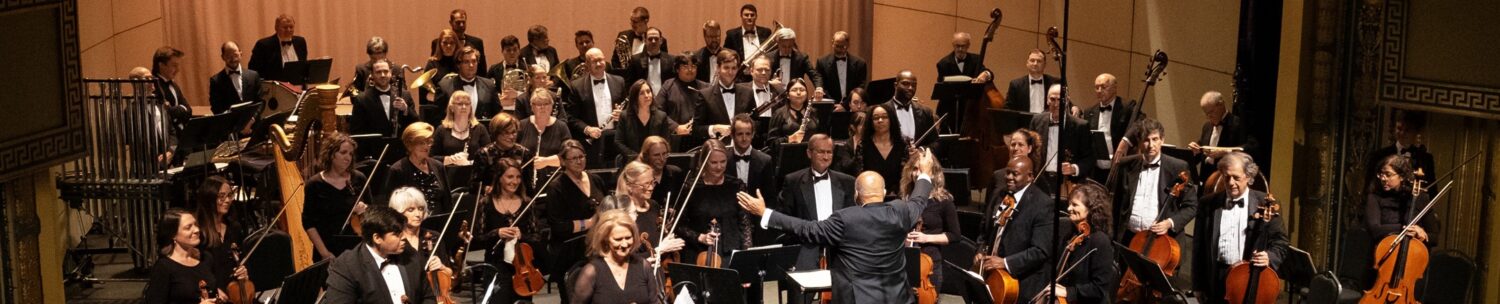
On February 14, 2025, the Durham Symphony Orchestra and I performed a free concert at the Carolina Theatre titled Voices of the Unarmed: Justice, Love and Resilience. It was an emotional and poignant concert, and the occasion led to five standing ovations. Many, including both audience and participants, were moved by the themes and experience of this concert and reached out to say so. It seems to have tapped a real need for community expression—and “the Moldau,” too, was part of this.
The program explored the extraordinary duality of living with injustice, loss, and grief while finding the wellspring of empathy, love, and resilience to go forward. (You can read more about the full program here: https://durhamsymphony.org/voices-of-the-unarmed/). Most of the programmed works were created from the context of the 20th and 21st centuries. Yet Smetana’s “The Moldau” (written in 1875) was featured prominently, too, as an equally profound artistic gesture that has come to represent both personal and national resilience over time.
Here is the Durham Symphony’s performance from that night:
Though our concert alluded to the fact only briefly, it’s worth explaining more fully here that Smetana’s “Moldau” (and the larger work Má Vlast) has held a powerful place in history.
In March 1939, after years of threatening to do so, the Nazi’s invaded Czechoslovakia. As the Czech people went about their daily lives, beneath the calm exterior was fear and pessimism. They wondered, What does one DO when the government becomes a fascist regime? What CAN one do? Putting up your hand against an authoritarian tidal wave only ensures a broken hand. Do you keep your head down like an ostrich in the sand?
The Germans who hated Hitler and the Nazis called that sort of withdrawal an “inner emigration”—a withdrawal from public life in the belief that it would allow them to survive and outlast the turmoil. Yet some empathetic and courageous souls cannot live with themselves on those terms and choose to be worthy of the sacrifices of ancestors who created a better world for them.
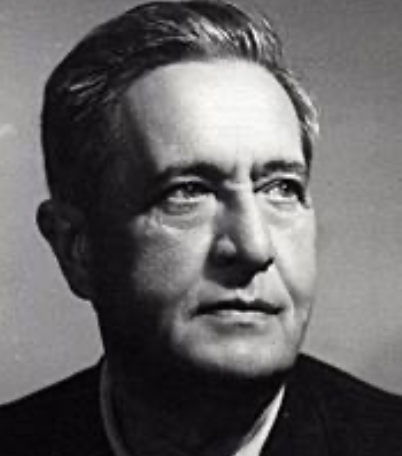
The great Czech conductor Vaclav Talich (pictured) was one of these courageous souls. I first discovered his recordings 20 years ago, and the biggest revelation was his inspired interpretation of Dvorak’s “New World” Symphony. (This work, a favorite of mine, anchored my first concert as Music Director of the DSO and will feature prominently on the celebration of our 50th Anniversary next May.) A national hero, Talich was the creator of the Prague Spring Festival. Like the rest of his countrymen, he was appalled when the Czech news media was replaced with Nazi propaganda, and the new regime began dismantling cherished aspects of Czech culture with “approved” German ones. In response, Talich chose to begin the 1939 festival with a bold act—a performance of what to the Czech people was a patriotic celebration of their strength and spirit: Bedrich Smetana’s Má Vlast.
In his introduction to this festival Talich wrote,
What else can strengthen our resolve and fill us with a sense of dignified national distinction if not Smetana’s indefatigable optimism…? Today, more than ever before, we have the duty to prove to ourselves as well as to others that we are willing to make every sacrifice for cultural solidarity and this solidarity is what is most important(Liner Notes. Smetana, Má Vlast. Czech Philharmonic/Talich. Supraphon, 2005. CD).
With that rallying cry, the stage was set for what we in the 1960s called a “happening” One can imagine the intensity the audience brought to this concert on June 6, 1939—an event that suddenly became something more than music.
And by some kind of miracle, we do not have to imagine this concert; we can hear it! Using the finest recording equipment of the time, Radio Norway recorded the event, and it was broadcast all over Europe. The musicians, inspired by the occasion, performed as if possessed. At the conclusion, the audience response was rapturous. The Prague National Theater had become a “safe space” where they could express their love for their country but also their defiance in opposition to an authoritarian government. The applause continued for many minutes, and it seemed it would never stop.
A reviewer wrote, “The storm of thunderous applause continued unceasingly. It was necessary to do something which would set us free and express what all of us felt but were unable to express. Vaclav Talich did just that. In the midst of the unrelenting excitement, he reached for the score of “My Country” and kissed it with humility and deep gratitude…In that moment a mighty wave of earthshaking emotion rose up, and the National Theater shook to its foundations with a surge of joy and assent…. “ (Liner Notes. Smetana, Má Vlast. Czech Philharmonic/Talich. Supraphon, 2005. CD).
Amid this outpouring of emotion, a small group in the audience began to spontaneously sing the Czech National Anthem as, one by one, everyone joined in. To me, it is one of the most moving moments in recorded history.
The video below is the end of that performance of Má Vlast from 1939. The coda begins at 1:16:25 (where the video should start.) The singing of the Czech National Anthem begins at 1:70: 50. Continue to end.
The significance of the defiance and patriotism exhibited by this event was not lost on the Nazis. Soon, all performances of Má Vlast were banned in the country.
Talich’s courage was beloved by his people—but not by the new Nazi government. To them, he was not a hero, but “an enemy of the people,” and because of this, the regime severely limited his conducting to a few concerts a year. In 1944, when the Soviets defeated the Nazis and became the new rulers of Czechoslovakia, Talich found that his troubles were just beginning. He was outspoken in his criticism of these new leaders, too, and after the war, the Soviets actually accused him of having collaborated with the Nazis! Talich spent more than a month in prison, and though the charges were proven false and he was ultimately released, his defiance was not forgotten. Though he was allowed to return to conducting in 1946 with a performance of Má Vlast, two years later he was banned entirely from public performance. Fortunately, he was allowed to make recordings with the Czech Philharmonic, which led to a brilliant resurgence of artistic activity, including powerful recordings of works by Dvorak, Janacek, Suk, and Smetana.
In my early 20’s, when I was Assistant Conductor of the Richmond Virginia Symphony, I had the pleasure of working with the most beloved member of the orchestra, the cellist Frantisek Smetana. He was related to the composer and named after Bedrich’s father. As a very “green” conductor, I was grateful for his validation of my dream to become a professional conductor. One night, I had an unforgettable conversation with him in which he spoke of his troubling experiences in Soviet-controlled Czechoslovakia. Like Talich, he had insisted on speaking out against tyranny. And like Talich, he paid a heavy price for his bravery. He was accused of “anti-state activity” and was imprisoned for a year and a half. Though he was released, he was thereafter marked as “unhirable,” and at the age of 50, he left Czechoslovakia, never to return. I was inspired by Frantisek the man and the musician, and he was a positive and encouraging mentor. He told me I had the making of a first-rate Verdi conductor due to my extroverted passion and my ability to make a lyrical melody “sing.” These are words I took very much to heart.
It is a nice coincidence that on our next program I will be conducting Verdi’s Overture to the opera Nabucco. The Durham Symphony played that work in a recent rehearsal, and I was pleased to tell them that they outdid the playing of an Italian orchestra I heard in Verona 25 years ago!
I hope you will join us for our 3 PM concert on October 19 at the Hayti Heritage Center that is a tribute to those who strive for artistic freedom.
-William Henry Curry, Music Director/Conductor, Durham Symphony Orchestra
Special thanks to Suzanne Bolt (editor), Mark Manring (Audio Engineer)
This DSO is funded in part by the City of Durham and is supported by the Mary Duke Biddle Foundation, the Durham Arts Council’s Annual Arts Fund and the N.C. Arts Council (a division of the Department of Natural and Cultural Resources).
 |  |  |