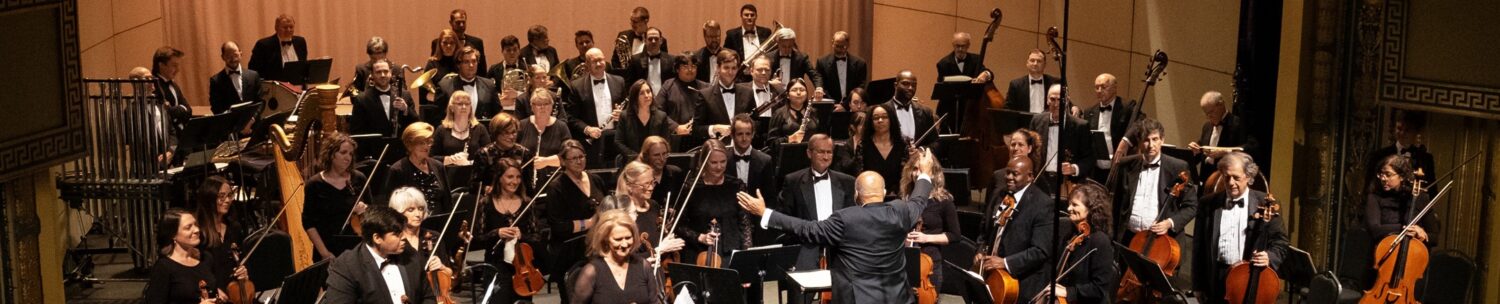
The Durham Symphony—Celebrating 50 Years!
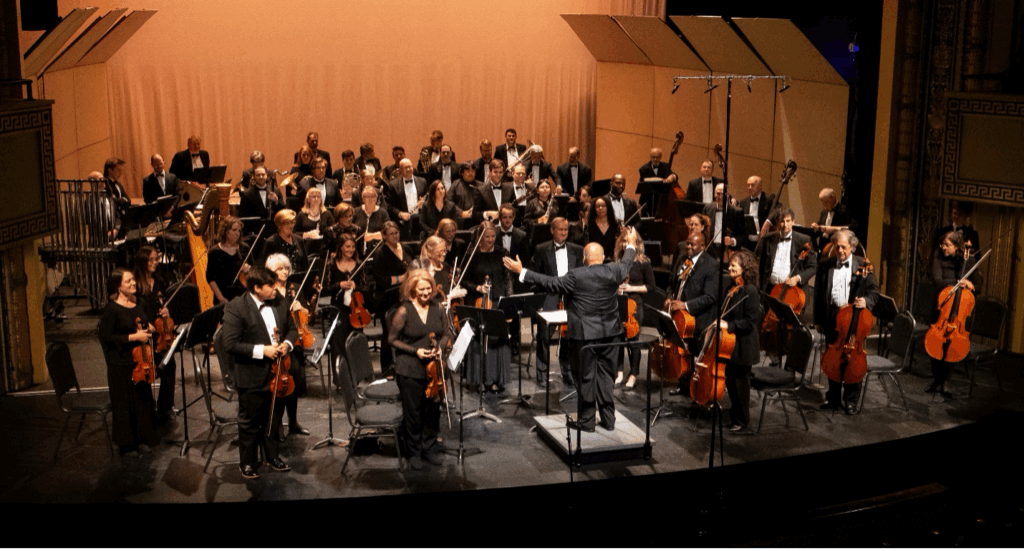
From the desk of Maestro Curry:
We hope you can join us at the Carolina Theatre at 8 PM on May 6th for a special concert celebrating the Durham Symphony’s 50th Anniversary and celebrating the power of American music and American voices as we approach the 250th anniversary of the Declaration of Independence. Tickets are still available here: https://carolinatheatre.org/events/live-event/letters-to-america-durham-symphony-orchestra/
The celebration will include the local premiere of a work by one of America’s most gifted young composers, Brittany J. Green. Her Letters to America was co-commissioned by the Durham Symphony with the American Composers Orchestra and the New Jersey Symphony. And the performance is the culmination of a broader project of letter-writing and representation capturing the voices and experiences of Black women writing their own letters to America as it nears its 250th milestone. (See https://durhamsymphony.org/letters-to-america/ for details on the work and the broader Letters to America Project.)
I heard the world premiere of this stunning work in Carnegie Hall on March 11, 2026. And we are thrilled that the Grammy-winning soprano at the premiere, Karen Slack, will be our guest artist for the DSO’s May 6th concert. This co-commission confirms our ongoing mission to present new works reflecting contemporary issues vital to our community.
I am grateful that the Durham Symphony also commissioned me to produce a special work for this occasion—the expansion of a work for string orchestra that was commissioned by UNC-Chapel Hill in 2022 and was inspired by my deep love of African American spirituals and the contributions of three profoundly influential African American women: Mahalia Jackson, Pauli Murray, and Harriet Tubman. The Musicale below discusses these influences in greater depth.
I decided to rename the new version for large orchestra Symphony: Dark Testament. The title comes from a book of poems (Dark Testament) by Durham’s own Pauli Murray” (1910-1985), a remarkably resilient and influential figure in American civic life. Orphaned at 12 and descended from both slaves and slave-owners, Murray became a legal trailblazer for civil rights, was the first African American female ordained in the Episcopal Church, and (in 2012) was named a saint by the Episcopal Church for her work in support of human freedom and dignity.
DSO Celebrates July 1st: Pauli Murray’s Feast Day – An American Saint
The spirit of Murray’s journey resonates powerfully alongside Brittany J. Green’s Letters to America, a work providing deeply empathetic context to the struggle and triumphs of all African American women.
Our May 6th concert will echo the DSO’s first performance in 1976 by opening the program with Bizet’s Act One Prelude to his opera Carmen. The choice goes beyond mere nostalgia. It’s a brilliant and exciting work, and the title character is considered by some to have been opera’s first feminist—an exuberant and beautiful woman who knows her own mind (like the writers of Letters) and will not be kept down.
The conductor of that first concert in 1976 was Vincent Simonetti, the Durham Symphony’s founding conductor and first music director. He came to this area in 1967 to be principal tubist in the North Carolina Symphony—a position he held until 1975. Prior to this, he had played for the famed Martha Graham Ballet Company and Paul Lavalle’s Band of America.
The idea of the Durham Symphony was born at a New Year’s Eve party, when Simonetti and musician friends discussed their wish for a community orchestra in Durham. Excited, the group started making plans and invited Simonetti to help recruit musicians and become the conductor of what was then an all-volunteer orchestra in the City of Durham. After 2-3 months of fine tuning the group at rehearsals, the orchestra made its debut in June of 1976: an outdoor concert at the Sarah P. Duke Gardens.
There was no printed program for that concert, but during an interview at Mr. Simonetti’s home a few months ago, he shared with me his memories of that first DSO performance and other early DSO programs of note. One of the most striking was his 1982 concert of all African American composers—a program well ahead of its time. This was years before the establishment of national holidays honoring Martin Luther King, Juneteenth, and the creation of Black History Month. We are looking forward to honoring Maestro Simonetti at this event.
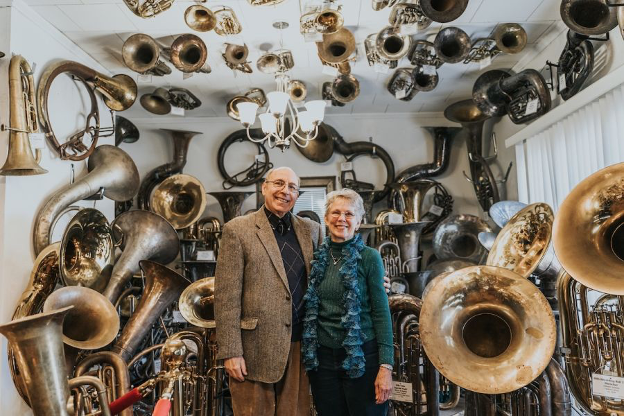
Another of Simonetti’s special legacies in Durham was his creation of The Tuba Exchange. Founded in 1984, this building houses his extraordinary personal collection of over 300 vintage tubas and rare (related) instruments such as the ophicleide.
In 1984, with The Tuba Exchange really taking off, Simonetti “retired” to the role of DSO tubist and board member (for 20+ years) and Alan Neilson become Music Director and Conductor. Neilson had served as the principal flutist for the North Carolina Symphony for several years, and in 1979, he had formed a new community orchestra in Raleigh—the Raleigh Symphony Orchestra, which he conducted until 2010 (the year before his death at age 80). The RSO is now celebrating its 46th year.
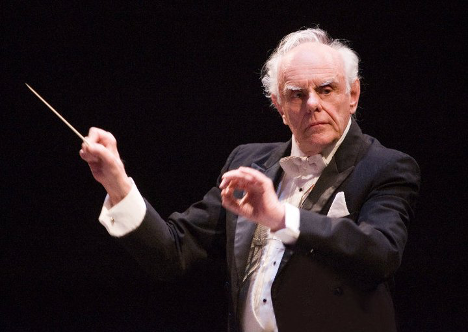
Though the RSO was Neilson’s first major undertaking as a conductor, his success there was clearly noted by others, and after a season of auditions, he won the DSO music director position. Neilson’s era was a remarkable period of growth for the Durham Symphony, and under his leadership, it became a semi-professional orchestra. When I arrived in North Carolina in 1996, I began hearing excellent opinions about the Durham Symphony and Neilson. It was just a few years later that my friends, John and Nancy Lambert invited me to spend an evening with them and with Alan. I found him to be very engaging and very enthusiastic about music.
After 24 years, Alan stepped down as music director, and after a series of auditions and interviews, I was invited to succeed him. The good work he had done with the orchestra was impressive, and I felt a responsibility to live up to Simonetti’s and Neilson’s visions and the orchestra’s desire to reach ever-higher musical standards and increased engagement with the community.
Sadly, Alan passed away in 2011. I was honored by the invitation to speak at his memorial service on March 8, 2011. Our principal violist Michael Castelo also spoke at this ceremony. He spoke affectionately about Alan’s love of music and his delightful, if often irreverent, sense of humor.
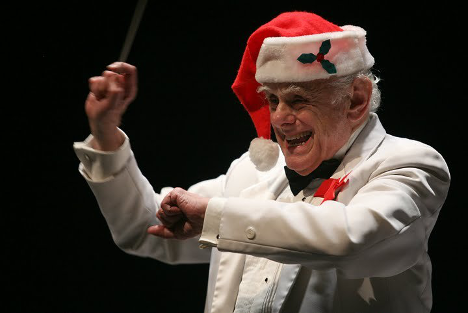
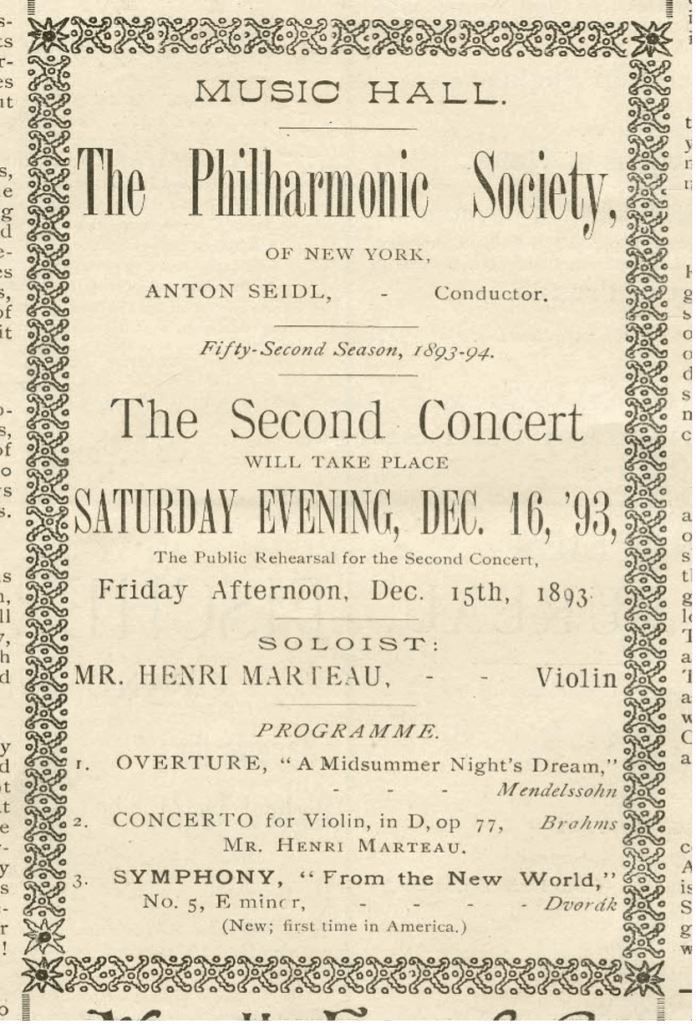
On another occasion I will devote more comments about the sheer joy I have had working with the DSO, next year entering my 18th season. My first concert as Music Director was in 2009, and the featured work on that first program was Antonin Dvořák ’s Symphony No. 9 (“From the New World”). So, it seemed appropriate to include it on our 50th Anniversary concert—and not merely for nostalgic effect! This epic work was Dvořák ’s demonstration of his strong belief that African American and Native American music could be adapted for symphonic purposes as he was doing with the folk music of his homeland, Czechoslovakia. During his time as Director of the National Conservatory of Music of America (New York), Dvořák had a 26-year-old African American assistant (Harry T. Burleigh), who introduced Dvořák to the spirituals he’d learned from his grandparents, who had been slaves. In creating the “New World” Symphony, Dvořák drew inspiration from these spirituals, from Henry Wadsworth Longfellow’s poem, “The Song of Hiawatha,” and from rhythmic and harmonic qualities of Native American music as he had heard and imagined it.
Below is a photo of the program from the world premiere of the “New World” Symphony in 1893. You may notice that it is listed here as his “Fifth Symphony,” not his Ninth, as we know it today. The history of that is complex—but in brief, some of Dvořák ’s earlier works were not published in his lifetime, and his symphonies were eventually renumbered to reflect the order in which they were composed.
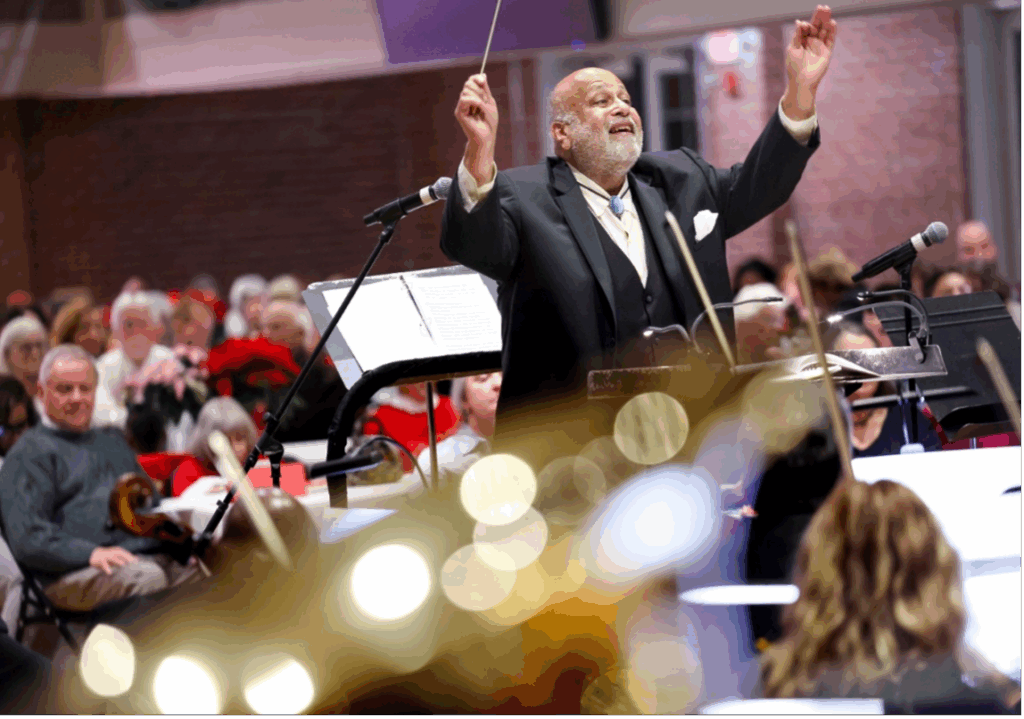
I share Dvořák ’s belief in America’s own music and potential. And from the beginning of my career, I have been a fervent advocate for American music and the American composer. On every concert I have conducted as Music Director of the DSO, I have included at least one work by an American composer. Strangely, the Durham Symphony is only the 2nd American orchestra to do this for more than four successive seasons! I have also been dedicated to premiering new works by gifted composers, most of them from this area.
The DSO has grown immeasurably in resilience, power, and skill through the years. It has a sturdy can-do spirit that was helpful as we weathered the financial storm of 2008 and the COVID year of 2020 when we were on hiatus. When we finally returned to giving concerts in 2021 (an outdoor pops concert at Treyburn not unlike that first outdoor concert at Duke Gardens), the experience brought forth many happy tears, including my own. As in the beginning, this is not so much a job as a labor of love. We find an incredible sense of joy in playing live music for our community…. and for ourselves. We hope that the next 50 years of the Durham Symphony Orchestra keep that pure joy alive and will honor the glories and resilience of our past.
Onwards!
William Henry Curry
Music Director
Durham Symphony Orchestra
We gratefully acknowledge support from the City of Durham’s Cultural and Public Art Program, the Mary Duke Biddle Foundation, the Durham Arts Council’s Annual Arts Fund, the North Carolina Arts Council (a division of the Department of Natural and Cultural Resources), and The Clinton Family Fund.
 |  |  |